.png)












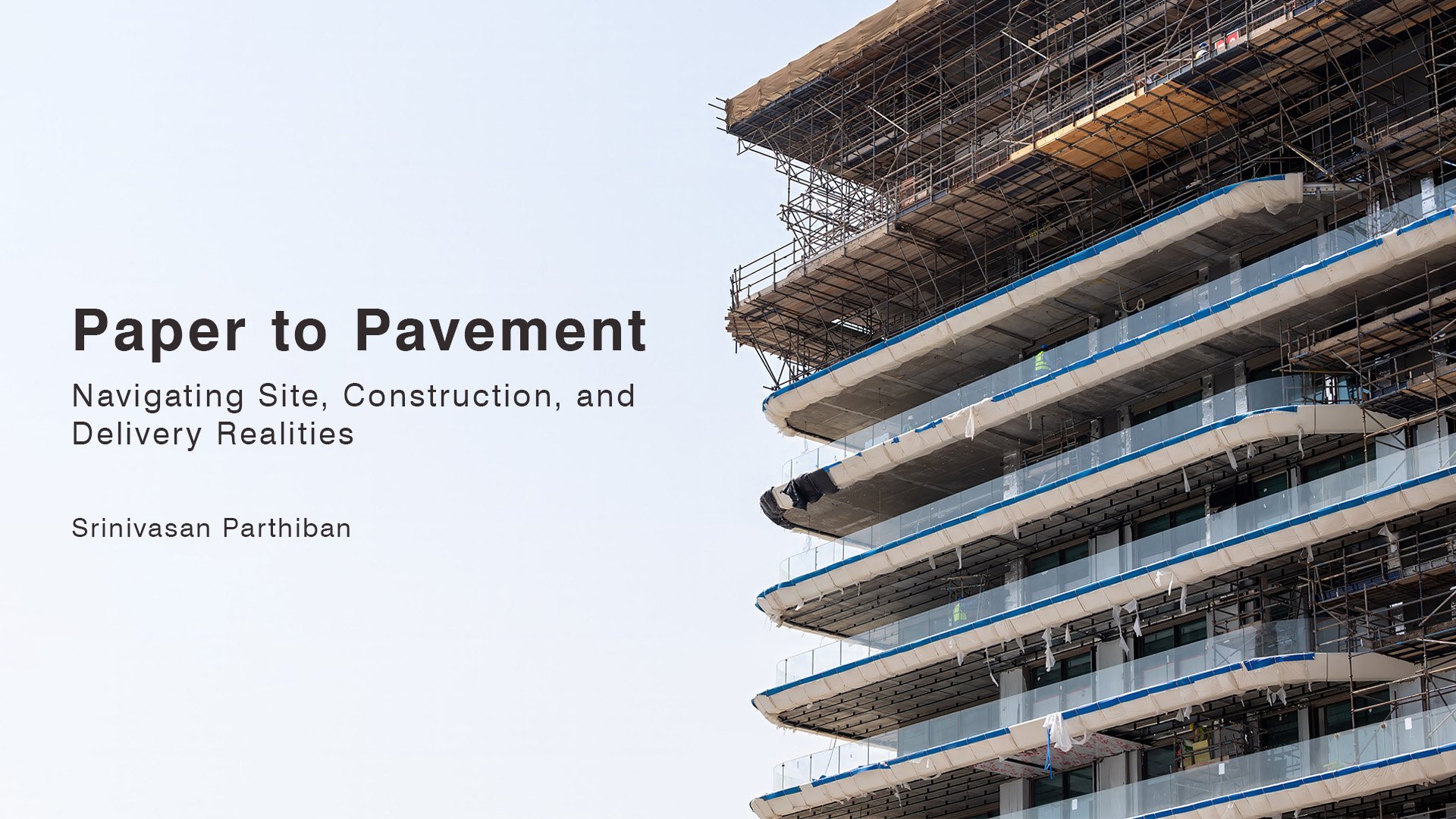
What does it really take to deliver a building? Every architect knows that drawings don’t build buildings, people do. It’s never just about drawings and deadlines, but about diplomacy, judgement, and a fair amount of dust. In this blog, I share what 40,000 inspections, 1,250 RFIs, and 10 handovers have taught me about communication, leadership, and trust on site, and the ground rules that have helped me deliver projects from paper to payment.
Delivering a building is never just about drawings, contracts, or milestones. Behind every successful handover lies a maze of coordination, negotiation, inspections and above all, people.After nearly two decades in the region, fourteen of which I’ve spent largely on site, I’ve learnt two truths:
- Drawings don’t build buildings, people do.
- To deliver anything bigger than a garden shed, you’ll need rules, diplomacy, and steel-toed optimism.
Over ten projects handed over in this region, currently handling forty thousand inspections, and one thousand two hundred and fifty RFIs (and counting) in a project, these ground rules have carried me through
Communication Is Not an Email
“I told you in my email” is not a construction strategy. On site, messages are like pigeons , unless you walk them where they need to go, they’ll circle back to sender.
- Daily team huddles beat mythical “big meetings.”
- If the client changes something after seeing it in 3D (having loved it in 2D), tell everyone , design, contractor, QS , immediately.
- If you don’t relay the change, the project will do it for you, via rework and cost.
Your job is part translator, part town crier, part therapist.
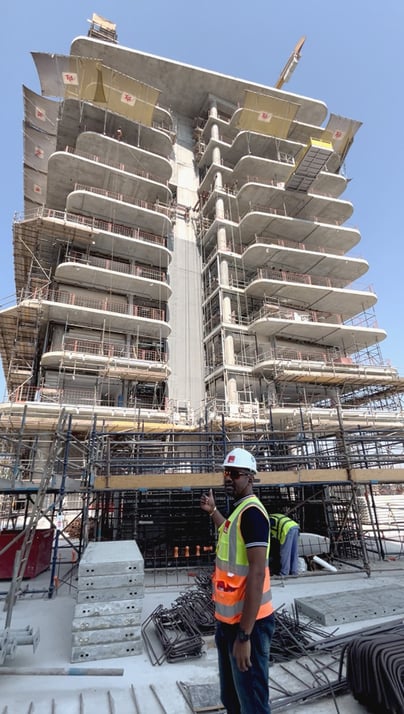
Set the Ground Rules Early
Before any project begins, establish your non-negotiables: communication, inspections, tolerances, and surveillance. Discipline in applying them consistently is what delivers projects, not chance. On paper, communication seems simple: emails, transmittals, minutes. But on site, “I told you so” doesn’t work. Every instruction must be repeated, reinforced, and confirmed in real time.
I keep daily briefings with my team, listen to contractor updates each morning, and attend client meetings fully informed. If a client requests a change, it must be relayed instantly to all parties , otherwise misunderstandings and costly mistakes will follow.
Know Your People Like You Know Your Plans
Some team members inspect brilliantly but can’t sketch. Others can solve geometry in their heads but shouldn’t be left alone with a snag list. Play to strengths. Give inspectors inspections, Give problem-solvers the knots to untangle, and Give detailers time with mock-ups, not microphones.
People management is construction management. Understanding strengths and aligning tasks accordingly keeps projects (and tempers) intact
Tolerances Are Sacred… and Situational
We logged forty thousand inspections on one project. Overkill? Not when an ITP says, “stop here and look.” Precision matters , five millimetres off on a table might be fine; five millimetres off on four towers? Absolutely not.
Be exact where it counts, pragmatic where it doesn’t. That’s judgement, not compromise. Every inspection , from setting out to final finish , protects the project from costly rework. The art lies in knowing when to insist, and when to accept.
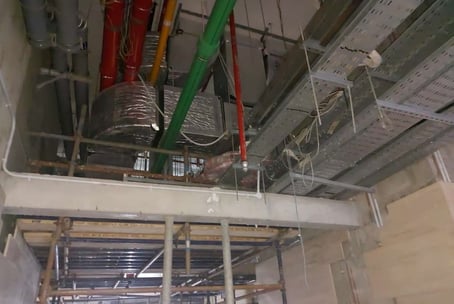
Surveillance Saves Budgets
With thousands of workers and only a handful of engineers, surveillance is critical. You don’t control a site , you patrol it. Look beyond your immediate inspection; ceilings hide MEP sins. Issue site observations early; NCRs (non-compliance reports) are not spite, they’re leverage.
Every visit should catch what drawings can’t: misaligned pipes, misplaced cables, unsafe detailing. When the final 10% becomes a 300-metre sprint, quality is usually the first to wheeze. Hold the line.
Practical Beats Perfect (but Must Outlive the Warranty)
Drawings can’t predict every clash, and Revit doesn’t climb scaffolding. Sometimes the best solution comes from the foreman lying beside you on the sixteenth-floor platform.
- Workshop solutions on site, not just on slides.
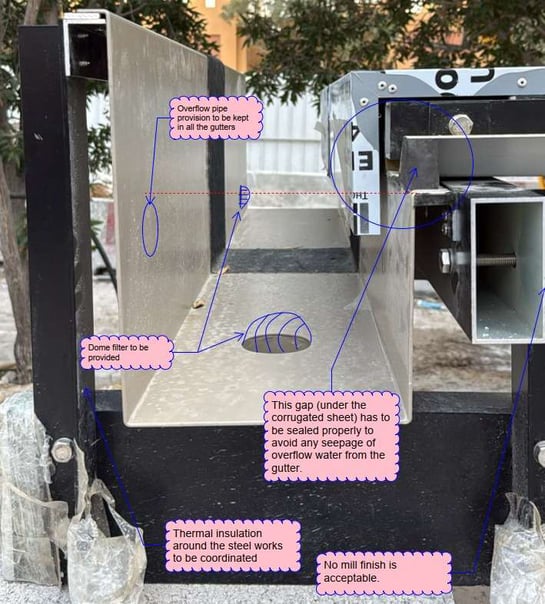
- Choose fixes that are durable, maintainable, and quietly reliable.
A practical solution today saves a failure tomorrow. Roof gutters and desert dust? Add the filters now , or enjoy a seasonal water feature later.
RFIs: Answer the Question, Not Your Pride
We’ve logged more than 1,200 RFIs. Some daft, many fair , all expensive if ignored. Don’t wait the contractual seven or fourteen days. Respond tomorrow. Clarify, decide, move. Delay breeds claims. My philosophy is "kill the RFI before it grows into a variation."
Negotiation Is a Daily Sport
Value engineering is not “value deleting.” Contractors will push alternatives; clients will question decisions. The best defence is education. Negotiation isn’t confrontation , it’s preservation.
- Explain why the specification exists.
- Protect durability, safety, and design intent.
- When the client sides with speed, redirect to risk and whole-life cost.
Time Equals Money
In construction, time literally equals money. On a billion-dirham project, a single day’s delay can cost half a million dirhams in penalties. That pressure drives contractors to rush and cut corners. Your role is to ensure speed never undermines quality. Swift decisions, documented reasoning, and transparent communication with the client are your shield against blame. Finish lines are where shortcuts multiply , stay alert.
Expect Problems , and Learn to Enjoy Solving Them
If no one brings you a problem by 10 a.m., you’re either the problem, or they’ve stopped trusting you. Treat issues as puzzles, not insults. Solve visibly, confidence spreads faster than panic. Once, a tower had no way to clean a glazing band (thank you, late design change), we stayed calm, corrected the contract, and kept it on the subcontractor’s ticket. Clean windows, clean conscience. Problems are not failures , they’re opportunities to strengthen the project. Over time, this rhythm of problem-solving becomes addictive. It sharpens judgement, builds confidence, and prepares you for the unexpected.
Safety Isn’t Negotiable
When someone say, “No one dies from five metres,” needs a reminder about gravity. Safety, code, and durability always come first. Beauty survives better when people do.
The Paper War
Handover isn’t “here’s the key.” It’s: “Here’s the key, and the 1,200-page record showing we asked, flagged, chased, inspected, and closed. During Covid, one contractor finished a sports hall just ten days late. The client was so relieved they forgot penalties , but we still issued every document. Relief is a feeling. Handover is a file.
Architect on site means:
- Translator of intent.
- Curator of tolerances.
- Negotiator-in-chief.
- Historian of decisions.
- Optimist with a clipboard.
It’s people, pace, and “please don’t drill there.” And when everything aligns , details land, services clear, and light hits the stone just so , it’s pure joy.
Parting Advice for Newcomers
- Walk the message. Don’t trust it to travel on its own.
- Match tasks to talent. Teams win; lone heroes burn out.
- Inspect like a hawk, tolerate like a judge.
- Fix it for the future, not for Friday.
- Decide, waiting is the most expensive option on site.
.jpg?width=570&height=321&name=shared%20image%20(6).jpg)
Final Thoughts
The journey from paper to payment is a test of resilience. It demands relentless communication, decisive leadership, and an unwavering commitment to quality under pressure. Construction is not just about buildings; it’s about relationships, negotiations, and trust.
Stick to the ground rules, embrace daily challenges, and lead with clarity, and your projects won’t just be completed, they’ll be completed well.
.jpg?width=352&name=verstappen-photography-DuYVeyb2IDE-unsplash%20(1).jpg)