.png)













Artificial Intelligence has become one of the defining conversations in architecture and honestly for a good reason. The pace of change is unlike anything our profession has experienced before. What began as software capable of generating images has rapidly evolved into technologies that accelerate workflows, expand creative exploration and challenge long-established approaches to design. Yet perhaps AI’s greatest impact is not on the buildings we create, but on the architects we are becoming.
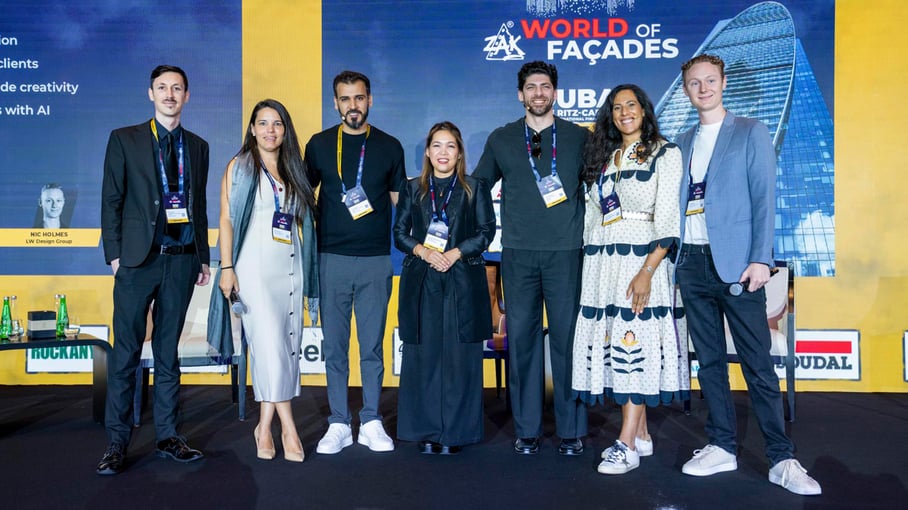 I recently had the privilege of joining the panel discussion Architect + AI: Designing the Next Generation of Façades, where architects, designers and technology leaders explored how artificial intelligence is reshaping one of architecture’s most expressive and technically demanding elements: the building façade. The conversation began with façades, but it quickly evolved into something far more fundamental the changing role of the architect in an age where intelligence is increasingly shared between human and machine. The question was no longer What can AI do? It became: If AI can generate thousands of ideas within minutes, what remains uniquely ours? For me, the answer is simple, as I shared during the panel, “AI is like a very enthusiastic intern. It gives me ten thousand ideas before I finish my coffee”.
Its ability to generate options at extraordinary speed is remarkable. Work that once required days or even weeks can now happen in minutes. But just generating possibilities is not architecture. As I explained, “I use AI to reach ten thousand options and honestly, maybe ninety percent won’t be usable, but one percent will be valuable”. That one percent is where architects matter. The profession has never been defined by how many ideas we can produce. It has always been defined by our ability to recognise which ideas deserve to move forward. Our value lies in judgement.
Judgement Is Becoming Architecture’s Greatest Skill
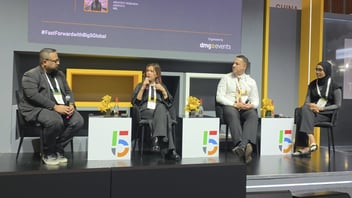
During the discussion, one panellist asked the audience how many people had used AI four years ago. Only a handful raised their hands. He then asked how many use AI today. Almost everyone did. That moment captured exactly how quickly artificial intelligence has moved from emerging technology to everyday reality. AI is no longer a distant concept, it has become embedded in our daily lives and is rapidly becoming part of everyday architectural practice. Within our profession, AI is also beginning to bridge one of architecture’s longest-standing communication challenges. For decades, architects have translated technical thinking into language clients could understand. Today, AI helps visualise ideas more quickly and communicate mood, atmosphere and design intent with unprecedented clarity. Clients, students, developers and non-designers can now generate compelling visualisations with ease.
Creativity Has Become Democratised

As image generation becomes accessible to everyone, the architect’s value shifts away from simply producing beautiful visuals towards something far more important: critical thinking.
As I explained during the panel, “The value I add as an architect is not just in creating the design itself, but deciding what gets built. I wouldn’t let AI create the design for me, it is my creative partner, but not my designer. It’s better to be the puppet master rather than the puppet”. AI can generate possibilities. Architects must determine which possibilities deserve to become reality. That distinction matters.
One of the most engaging discussions centred on a growing phenomenon many architects are beginning to experience, this is true particularly when some clients arrive with AI-generated concepts. “We’ve had this experience. Clients are now coming to architects with AI-generated briefs. I call some of them Instagram Architecture. It looks beautiful for three seconds. But when you scrutinise it, you realise it isn’t buildable. We advise and educate our clients. We’re hired to serve, solve problems and be creative. We add technical expertise to creativity”.
This, perhaps more than anything, demonstrates why architects remain essential. AI can produce seductive imagery, but real architecture demands so much more. A façade may appear extraordinary in an AI-generated image, but architecture must respond to climate, solar orientation, material performance, structure, detailing, access, safety, maintenance, regulations, budget and construction realities. Buildings must endure decades, not simply capture attention on a screen.
Architecture Has Never Been About Creating Images. It Has Always Been About Solving Problems
“Every prompt can generate thousands of images. But we’re not hired to generate more images. We’re hired to solve problems. We make executive decisions based on experience and technical skills. We decide what gets built”. AI expands the design space. Architects provide the judgement that gives those possibilities meaning. We understand context.
We understand consequences. We understand that buildings are not objects to admire but places where people live, work, learn and experience life.
From Intelligent Tools to Intelligent Buildings
As the discussion progressed, the conversation moved beyond today’s software and towards the future of architecture itself. I posed a question that continues to stay with me: “What if AI isn’t just a digital tool? What if it’s embedded into buildings themselves? Architecture is frozen in time, we design it, we build it, and then it stays that way. But what if, in the future, buildings could learn, evolve, move and respond to their users? The future building will not be still as it was designed. It will be learning, evolving and progressing with its users.” For centuries, architecture has been largely static. We design. We build. We hand over. But artificial intelligence presents the possibility that buildings themselves could become adaptive, learning from occupants, responding to changing conditions and continually improving over time. This shift has the potential to redefine not only architecture, but the relationship between people and the spaces they inhabit.
The Real Risk Isn’t AI
When discussions about artificial intelligence arise, the inevitable question is whether AI will replace architects. I don’t believe it will. My concern is something entirely different. “My biggest concern isn’t that AI will replace architects. It’s that architects may become passive. If architects and creatives stop questioning and challenging assumptions, and just accept whatever AI produces, we will then risk outsourcing what our profession is built upon: judgement. AI is here to automate repetitive tasks, not critical thinking. As architects our greatest responsibility is not generating ideas, but deciding what gets binned and which ideas deserve to become reality. The real danger isn’t AI replacing architects. The real danger is architects, designers and creatives replacing their own judgement with AI”. Technology should amplify curiosity, not diminish it. It should accelerate exploration, not replace responsibility. It should free us to think more deeply, not tempt us to stop thinking altogether.

Designing the Next Generation of Architects
Although the panel was titled Architect + AI: Designing the Next Generation of Façades, I left believing we had explored something even more significant. We were discussing the next generation of architects. AI will continue to transform our workflows, reshape our processes and expand our creative possibilities. It will change how façades are conceived, analysed and communicated. It will make exploration faster than ever before. But architecture has never been defined by the number of options we generate, It has always been defined by the decisions we make. Artificial Intelligence may generate possibilities but architects decide and curate which possibilities deserve to become places.